



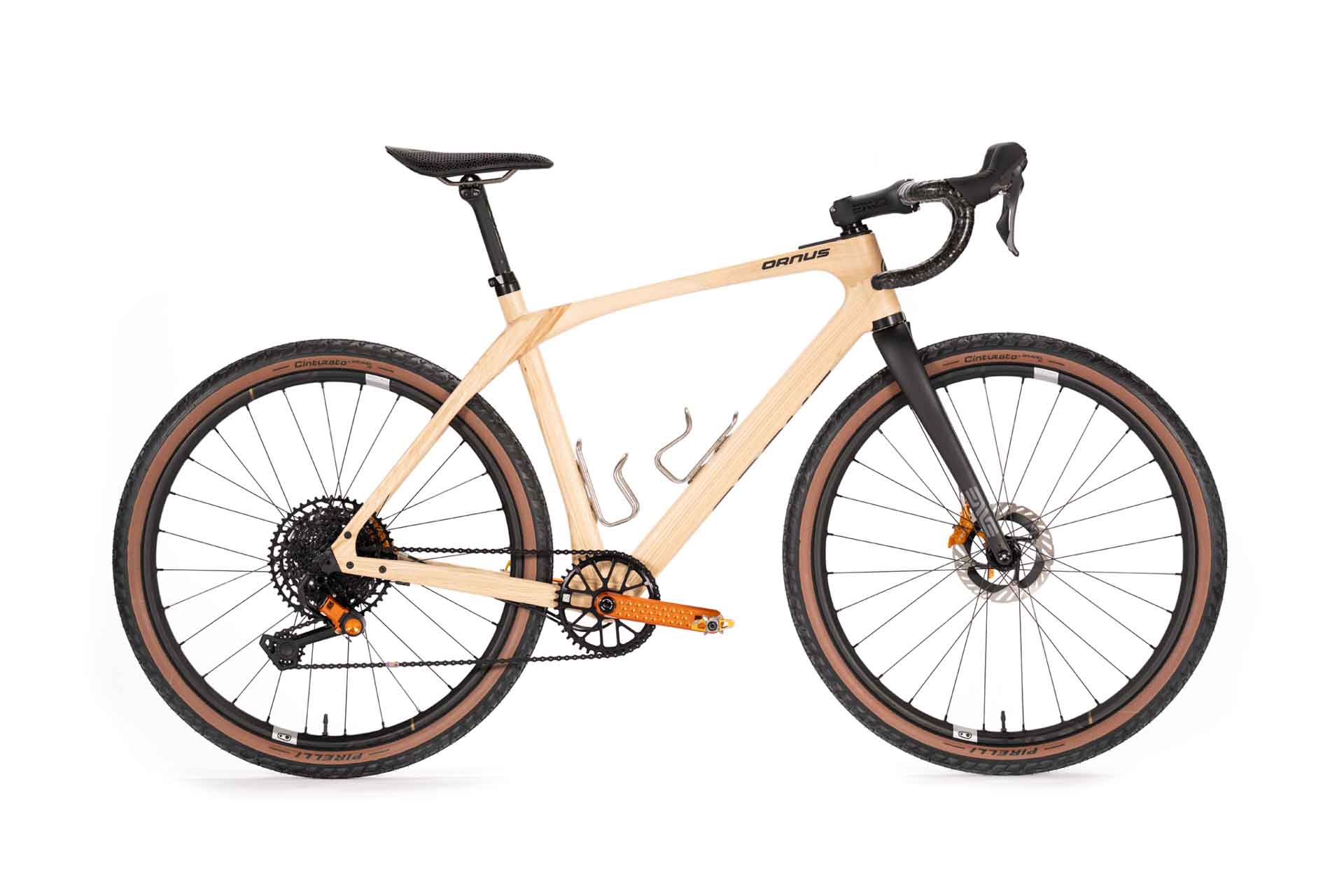
The Ornus wooden frame stems from a simple and revolutionary idea: to demonstrate that wood can be a technical and therefore competitive material for building high-performance bicycles. A project that thus combines design, engineering, and sustainability, reinterpreting the oldest building material in a modern way.
Indeed, in recent years, various bicycles with wooden frames have appeared worldwide, often conceived as concepts or style exercises. However, most of these projects have remained at the experimental stage. Therefore, t he critical issue is not in the material’s strength — wood is surprisingly robust — but in the ability to industrialize production, maintaining consistency in quality, performance, and costs.
The Ornus frame addresses this challenge with an advanced engineering approach: controlled processes, constructive precision, and structural optimization. The result is consequently an innovative all-Italian bicycle that combines the natural beauty of wood with modern mechanical technology.
Wood as a structural material. Much more than a style exercise
Contrary to common perception, wood has excellent mechanical efficiency, with an excellent strength-to-weight ratio, comparable to titanium and superior to steel and aluminum.
Indeed, wood, compared to carbon fiber, although it cannot compete in terms of pure lightness, offers complementary advantages: comfort, vibration damping, elastic behavior, and environmental sustainability. Therefore, a wooden frame is a technical and conscious choice for those seeking a more natural and comfortable riding experience.
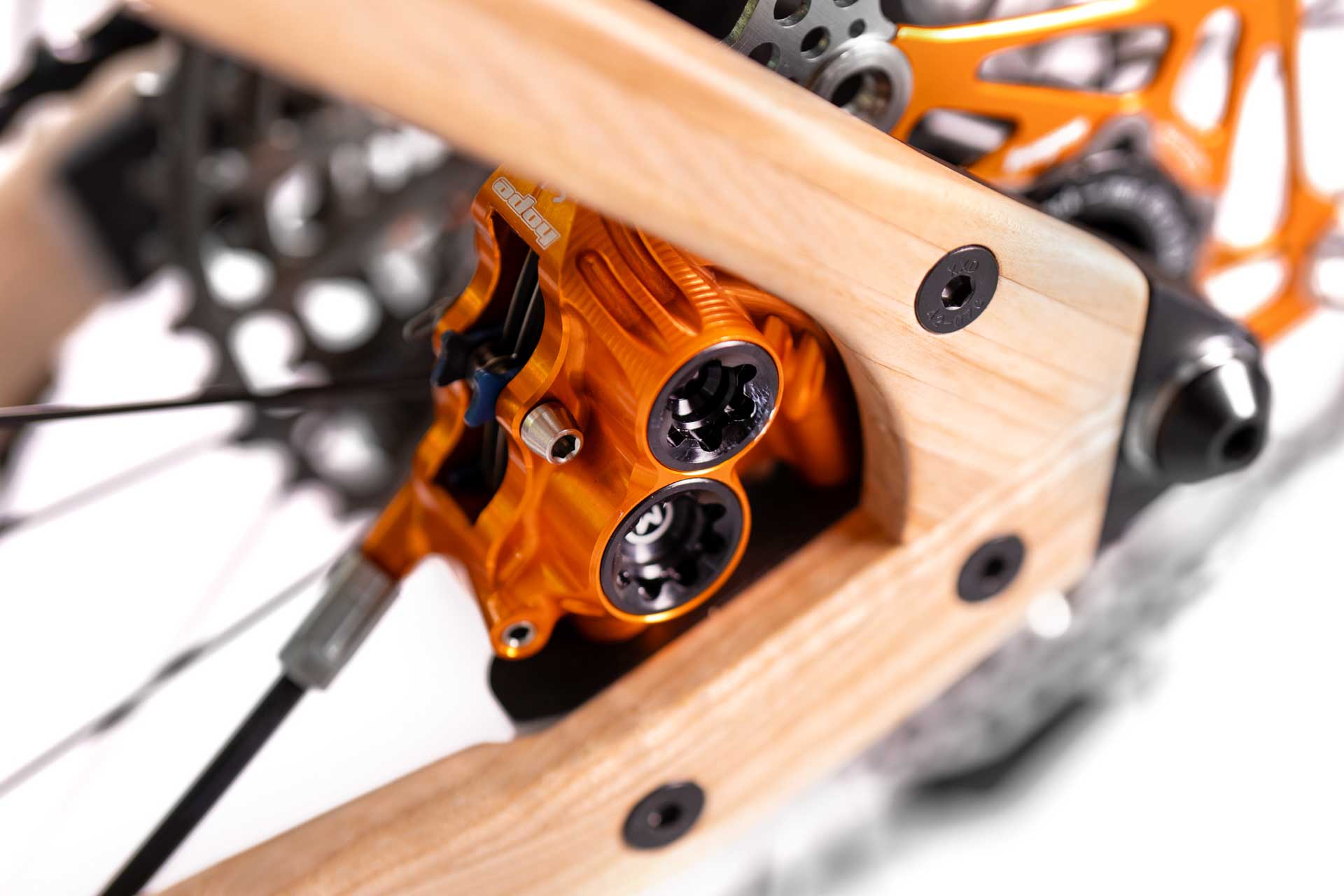
The Ornus frame is born from an advanced production process that combines multi-axis CNC machining and patented construction techniques. Structural simulations and experimental tests have allowed for the optimization of each component, ensuring certified strength according to ISO 4210 standards.
The average weight of an Ornus frame is about 1.5 kg in medium size, with variations linked to the natural density of the wood and the possibility of lightening up to 300 grams for more sporty versions. An exceptional result for a natural material, achieved with a combination of hollowed shells, structural joints, and inserts in 7075 and 6082 aluminum alloy for mechanical anchoring points.
Maximum comfort, constant traction, dynamic response
The core of the Ornus project is therefore in wood’s ability to transmit unique sensations while riding. Unlike carbon, which favors extreme rigidity, wood naturally absorbs vibrations and therefore better copies terrain irregularities.
Therefore, this behavior makes the frame particularly suitable for gravel and use on mixed terrains. The result is thus

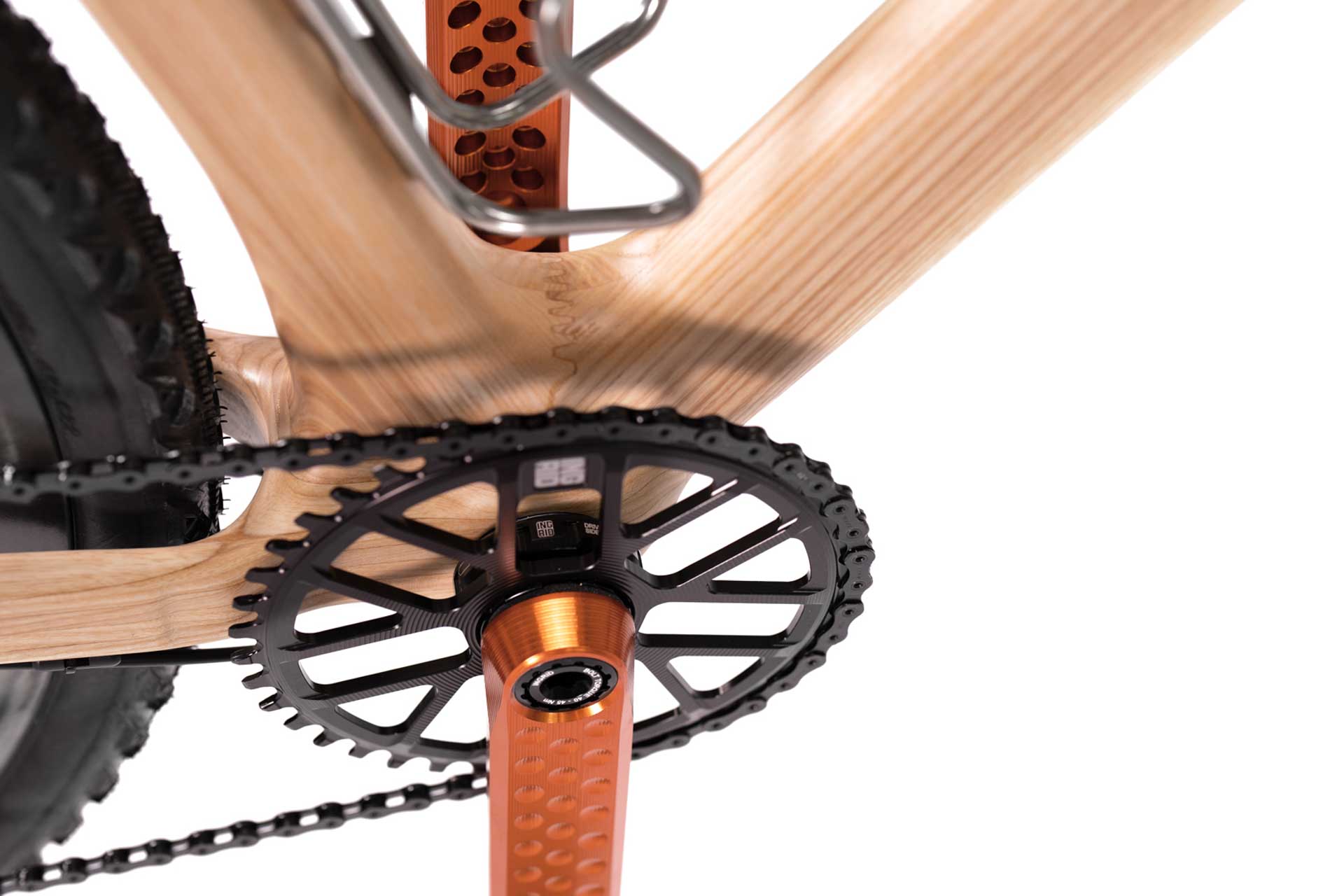
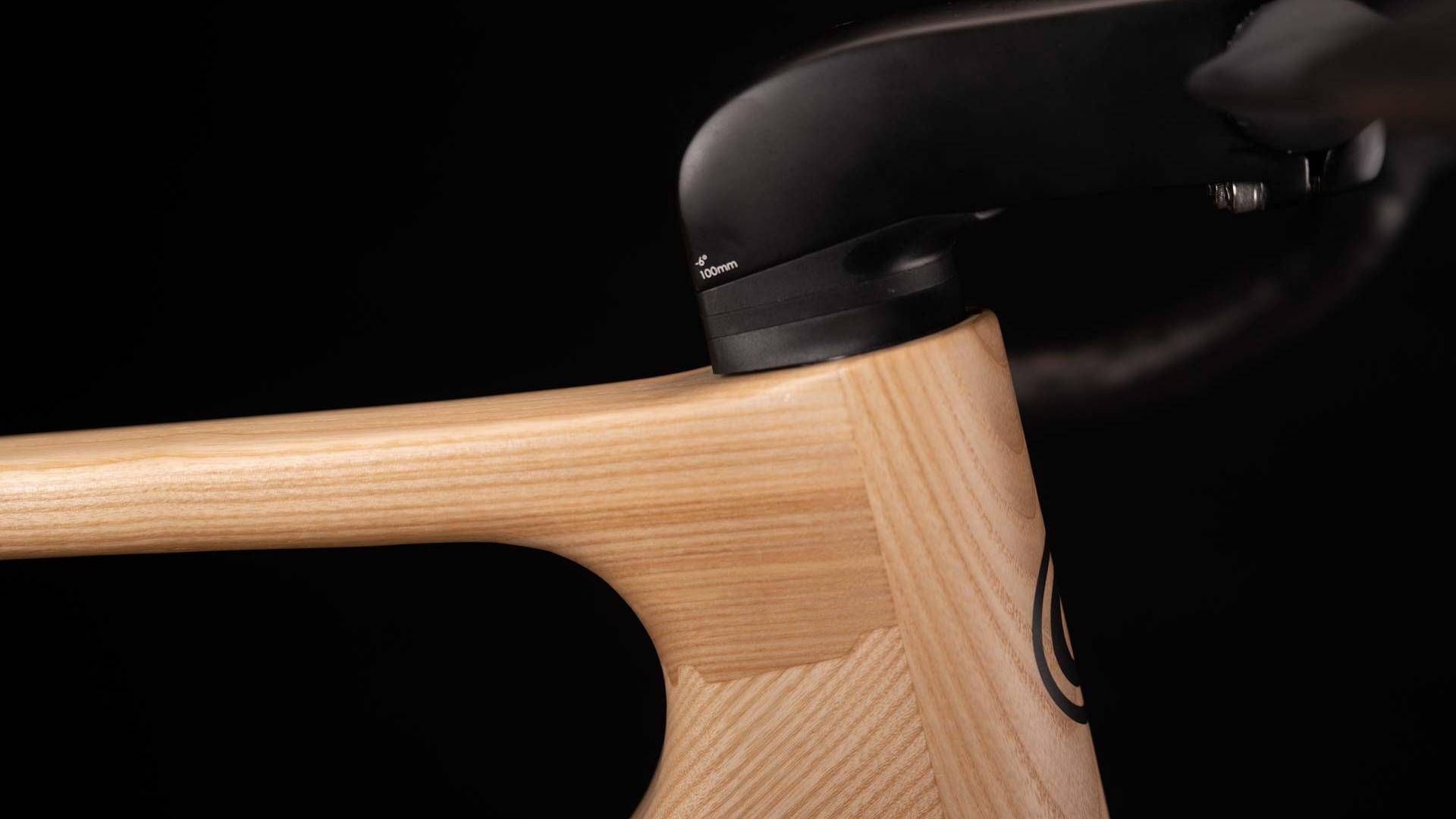
The Ornus frame is indeed made of six internally hollowed sections that join to form a monolithic shell. The finger joints, bonded with high-performance two-component resins, therefore allow the adhesives to work in shear, improving stress transmission and overall robustness. The laminated rear triangle It is composed of nine layers with alternating fibers to compensate for internal tensions and prevent deformations. This patented solution therefore ensures long-term stability and excellent dynamic performance. The structural joints in 7075 and 6082 aluminum alloy ensure optimal integration between the wooden part and mechanical components, such as the headset, bottom bracket, and seat cluster.

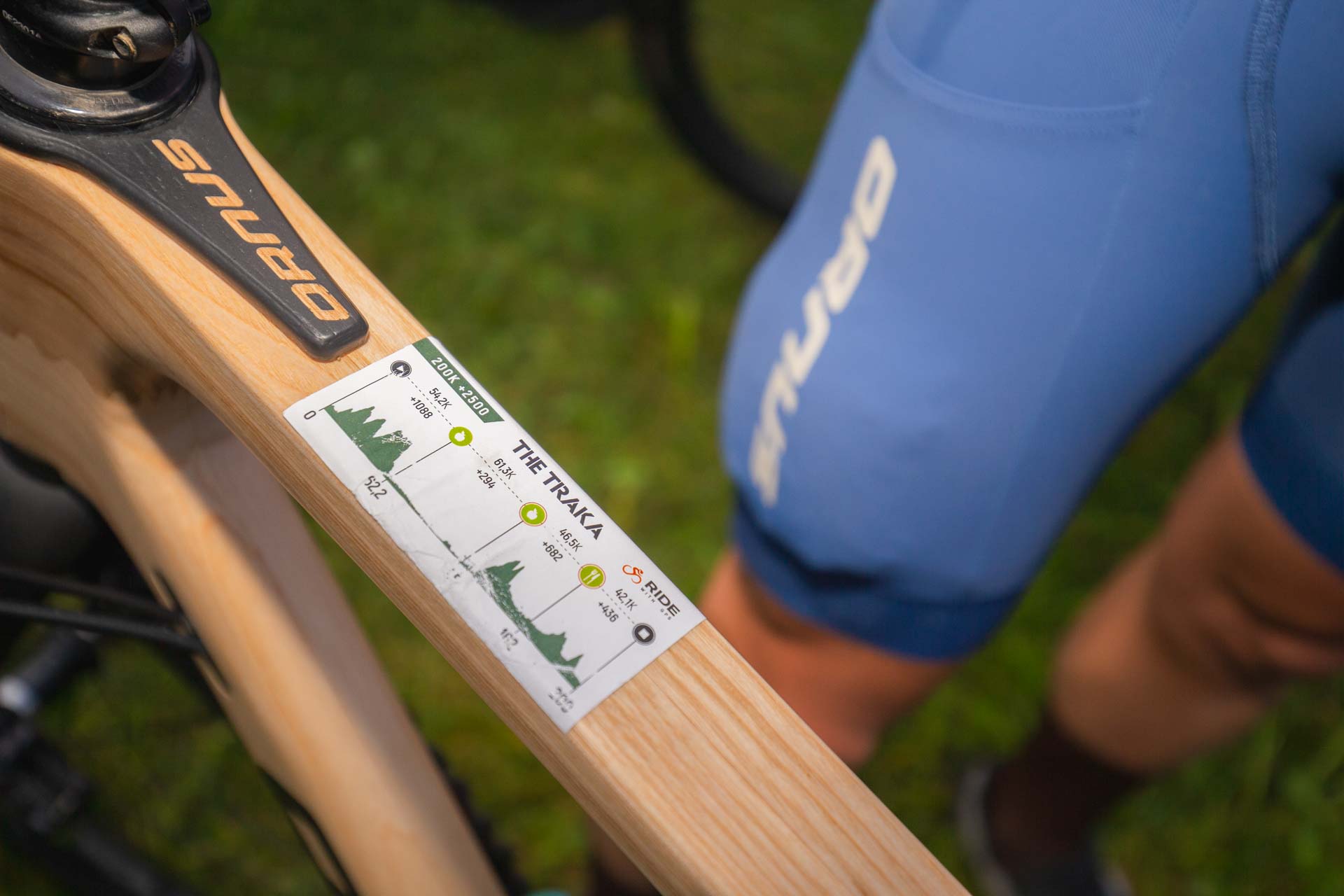

What if your next bike was an ORNUS wooden bike?
Let yourself be surprised by the unique feel of an Ornus wooden frame. Natural, responsive, surprisingly comfortable. An authentic riding experience, designed for those seeking more than just a simple bicycle.
Request more information by writing to press@ornusbikes.com — and discover what it means to ride with style, comfort, and performance at maximum power.